

How I Use Explorers to Read Solana Like a Living Ledger
Whoa! I stumbled onto the Solana chain this week while poking around. Something felt off about the usual block explorers I had used. Initially I thought they all did the job, but then I realized the UX, speed and NFT-specific features vary wildly and the differences matter for traders and collectors alike. My instinct said check the transaction traces, then look at token mints, and finally see how clearly the explorer surfaces owner histories, because that’s where many surprises and scams reveal themselves.
Seriously? An explorer should be fast, transparent, accurate, and easy for humans to parse. It needs to show transactions, program interactions, tokens and NFT histories. On Solana, where blocks are frequent and transactions are cheap, an explorer that lags or hides instruction details can cost you time, money and trust—especially if you’re watching for rug pulls or airdrops. So when I dig into a new tool I test token trackers against on-chain events, NFT mints against metadata links, and wallet histories across program calls to judge the explorer’s fidelity.
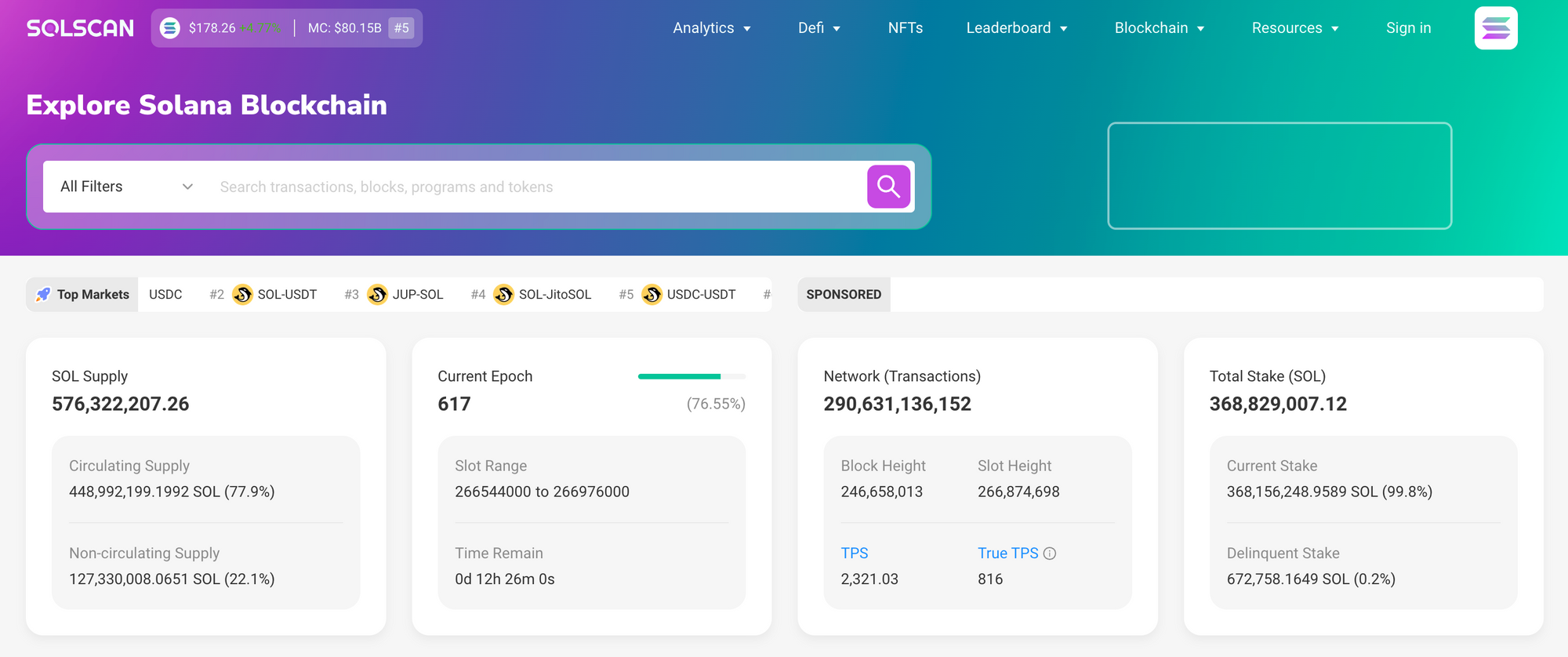
Okay, so check this out—I’ve been using tools like Solscan and a couple others. If you want a fast read on transactions and tokens try Solscan. The interface surfaces decoded instructions, token balances, token transfer history and quick links to token metadata, which makes it practical for both developers and collectors who need reliable on-chain evidence when something looks fishy. I’ll be honest—it’s not flawless, but the responsiveness and clarity often beat other options, and that matters when gas or block conditions force you to act in seconds rather than minutes.
Why NFT tracking needs more than a pretty gallery
Wow! NFTs on Solana are a zoo of metadata standards and off-chain pointers. Good trackers index both on-chain mint events and the referenced JSON endpoints. That means a useful explorer must show the raw mint instruction, the mint authority, the update authority, and the external URI so you can quickly verify if a metadata host has changed or if a suspicious redirect occurred. When I chase provenance for high-value pieces I cross-check multiple explorers, check archived metadata snapshots, and sometimes ping other collectors in Discord because somethin’ in the metadata often tells the tale.
Hmm… Token trackers should provide liquidity pool details and supply breakdowns. They should also expose token creator addresses and unusual minting events. On one hand, seeing sudden issuance can be legitimate for protocol reasons; though actually sometimes that same event signals stealth dilution or a pre-funded slush—so context is everything. So I look for charts that tie transfers to known market makers, dashboards that mark large-holder concentrations, and logs that make it easy to trace where supply moved in panic moments.
Really? Tracing wallets can reveal laundering, wash trading, or coordinated minting patterns fairly clearly. A good explorer links addresses to program interactions across time. I once followed a wallet that oscillated between marketplaces and staking programs and traced an exploit back to a bad anchor call, which wouldn’t have been obvious without clear instruction decoding and time-ordered event views. That investigative workflow is part forensic, part detective work, and the right explorer makes those patterns surface rather than burying them under noisy UI elements.
Wow! APIs matter as much as the UI for serious users. Developers need reliable endpoints, sensible rate limits, and clear schema docs. If you’re building tooling or analytics on top of Solana, the difference between a flaky API and a robust one can mean wasted engineering time, delayed features, and ultimately missed trade opportunities in volatile windows. So I prioritize explorers that offer both a performant UI and comprehensive API access, because I want to script audits, pull historic transfer logs, and build alerts without juggling half-documented responses.
Whoa! Scams and social-engineering attacks evolve quickly on-chain and adapt to explorer features. A good tracker flags suspicious mints and abnormal holder distributions. This part bugs me about some explorers sometimes. On Solana, blacklisting or flagging suspicious programs isn’t perfect, but having clear evidence—program IDs, instruction types, and timing—lets a community make faster, better decisions rather than guessing in the dark. My working rule is to treat on-chain evidence as primary and social claims as secondary until the explorer’s traced metadata and transaction history corroborate a story.
I’ll be honest—I’m biased toward clarity, repeatability and trustable data in tools. Initially I favored speed, but I learned to slow down. Actually, wait—let me rephrase that. Initially I thought speed trumped everything, but then I realized that without precise decoded data and stable APIs you build fragile workflows that break as chains and programs evolve, so tradeoffs matter a lot. I’m not 100% sure about every explorer’s roadmap, and sometimes I find features missing that I didn’t even realize I’d need—like archived metadata snapshots or easy wallet labeling—so I keep a list of must-haves and nice-to-haves.
Okay. Here are practical pre-flight checks before you trust an explorer for real trades. Verify decoded instructions carefully and confirm token mint authorities and metadata links. Check that NFT metadata URIs return consistent JSON across multiple snapshots, that token supplies match ledger evidence, and that large transfers can be traced to exchanges or liquidity pools when relevant. Also test the API with edge cases, simulate rate-limited scenarios, and practice following suspicious flows to build intuition about what ‘normal’ looks like versus what deserves a red flag.
So—Explorers are not just tools, they’re maps to on-chain truth. When a tool surfaces clear provenance and token history you make better calls. My final thought is that the best explorers let you move from curiosity to certainty faster by combining fast UI, deep decoded insights and APIs, and while no tool is perfect, picking one that leans into transparency saves time, and money, and sometimes reputations. I still find surprises daily, and that keeps me curious, a little annoyed, and always checking the transaction traces before I click ‘buy’—and that habit has saved me more than once.
Try it
If you want a hands-on look at decoded instructions, token histories, and NFT provenance try the solscan explorer and compare its outputs against other explorers to build your own checklist—oh, and by the way, make notes during your first ten inspections because you’ll remember patterns faster that way.
FAQ
What’s the single most important thing to check?
Check mint authorities and decoded instructions first; they reveal whether tokens can be arbitrarily reissued or updated, and that fact alone changes how risky a holding is.
Do explorers prevent scams?
No, they don’t prevent scams, but they provide the evidence and timelines that help you spot red flags sooner and make smarter, faster decisions.